And then it landed on your desk. ”Should we host a webinar?”
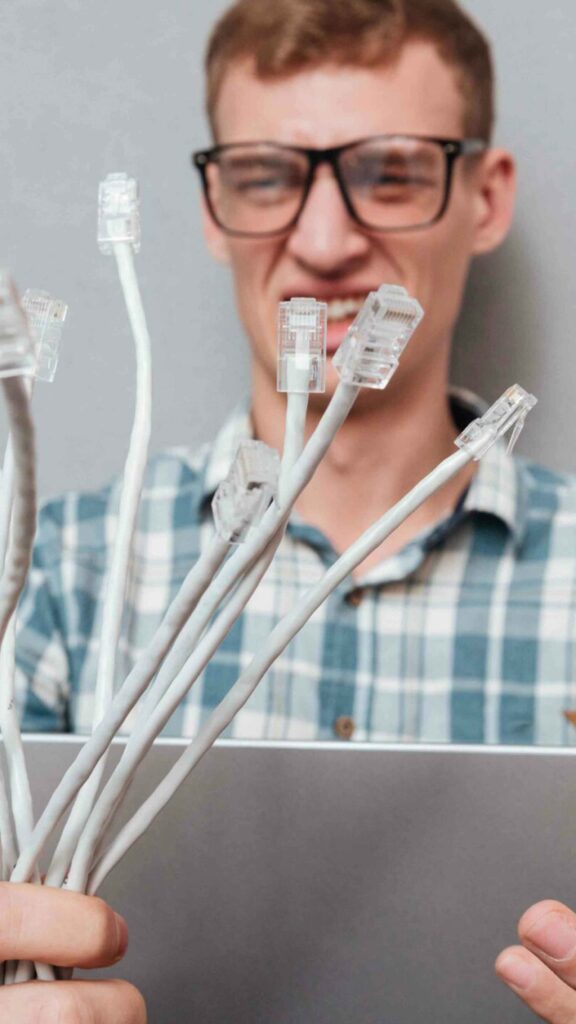
The first thought is usually the same: Where on earth do we even start with this? Do I need to choose a platform? Do I need to buy a camera? Who knows how to handle the audio? And what if the whole thing crashes in the middle of the broadcast in front of a hundred people?.
The good news is: none of these is where planning a webinar begins.
We’ve been producing live broadcasts for over 13 years—seminars, training sessions, conferences, and hundreds of webinars. During that time, one thing has become clear: the difference between a successful and a failed webinar isn’t about the technology. It comes down to whether we knew in advance what we were doing and for whom.
So, the most important thing is to answer three questions:
What do we want to say, to whom, and why?
Once those are settled, the rest is up to us.
In this guide, we'll go over what you really need to consider when organizing a webinar—without getting into the technical details. And we'll explain why it's almost always better to plan for multiple webinars rather than just one.
What Is a Webinar?
A webinar is a seminar held online. The term comes from the English words web and seminar, and that's where the etymology ends.
In practice, a webinar can be almost anything: an expert presentation, a training session, an interview, a panel discussion, a product demonstration, or a customer event. It can be a live broadcast, a pre-recorded program, or a combination of the two.
Regardless of how it is implemented, the question is always the same: Why should a viewer spend their time on this in particular?
If we can find a good answer to that, we'll already be surprisingly far along.
Webinar, online meeting, or hybrid event?
These three are often confused, and it’s important to know the difference—it affects how the event is carried out.
| Webinar | Online Meeting | Hybrid event | |
|---|---|---|---|
| Audience size | from tens of thousands to tens of thousands | under 20 | varies |
| Who's speaking? | performers | all | performers |
| The audience participates | questions and votes | freely | both ways |
| Where is the audience? | online | online | partly in person, partly online |
| Tallenne | almost always | rarely | often |
If part of the audience is in person and part is online, this is a case of hybrid event. It's in a class of its own, because the event has to appeal to two audiences at the same time.
Why You Should Host a Webinar
The best part is how easy it is to participate. No one has to travel anywhere, so the event attracts an audience from all over Finland—or even the world.
A webinar is an effective way to share expert knowledge, train customers or staff, reach new customers, and build an image of expertise.
And then there’s the aspect that’s most often overlooked: a single broadcast generates much more than just a recording. Short videos, social media posts, articles, and newsletter content. One hour well spent can fuel your communications for months.
That is why it is best to view a webinar as part of an ongoing communication strategy, rather than as a one-time event.
Where Should You Start?
It's not about platforms. It's not about equipment. It's not about who has the best camera.
You can start the planning process with a single question:
What do we want to achieve, and who do we want to reach?
There you go. That'll get you started.
We can get involved right from the very first idea. Together, we’ll figure out the implementation, structure, and timeline—and how your content works best on screen: what to show, in what order, and for how long.
We also create a schedule for the event—that is, a run-of-the-show. It’s a minute-by-minute outline of what’s happening at any given time and who’s doing what. It sounds meticulous, and it is. That’s exactly why it works: on broadcast day, no one has to guess when their turn is.
So no one has to train to become a webinar producer in order to host a good webinar.
What We Need From You—and What We'll Take Care of Ourselves
This is the most important part of the guide, so let's get right to the point.
We need five things from you
- Topic — What would you like to talk about?
- Performers — who among you can best tell us about it?
- Your audience — who do you want to reach?
- Goal — What do you hope will happen after the webinar?
- I’m reaching out to your own network, which knows us better than we do
We'll take care of the rest
- Planning the Implementation Method and Structure
- Presenting the content in collaboration with your experts
- Running and Driving Schedule
- Performer Guidelines and Rehearsals
- Selecting and Managing a Delivery Platform
- Video, Audio, Lighting, and Graphics
- Broadcast Monitoring and Backup Arrangements
- Marketing support: invitations, newsletters, social media, and search engine visibility
- Recordings, Clips, and Their Subsequent Use
- Participant and Audience Reporting
You can move the boundary in either direction. Would you like to do part of it yourself? That's fine. Would you like us to take care of everything? That's fine, too.
There is one thing, however, that is non-negotiable: On the day of the broadcast, none of you should have to supervise production.
A single webinar or a webinar series?
The short answer is: almost always a series.
A single good webinar can reach a lot of people. But think of it like a newsletter or a podcast—a single release rarely builds an audience. A series gives people a reason to come back.
A series does not necessarily mean a webinar every week. It could be a monthly expert broadcast, a quarterly review of current events, or a series of a few episodes centered around a single theme.
And here's the part that usually comes as a surprise: A series is easier for the organizer than a single webinar.
The first time, you develop the concept and the production method. The second time, there's no need to reinvent the wheel.
The topic changes. The guests change. The content changes. But the production doesn't have to.
Once we're familiar with you and the concept, preparing the next broadcast essentially just means choosing a new topic, the performers, and the date.
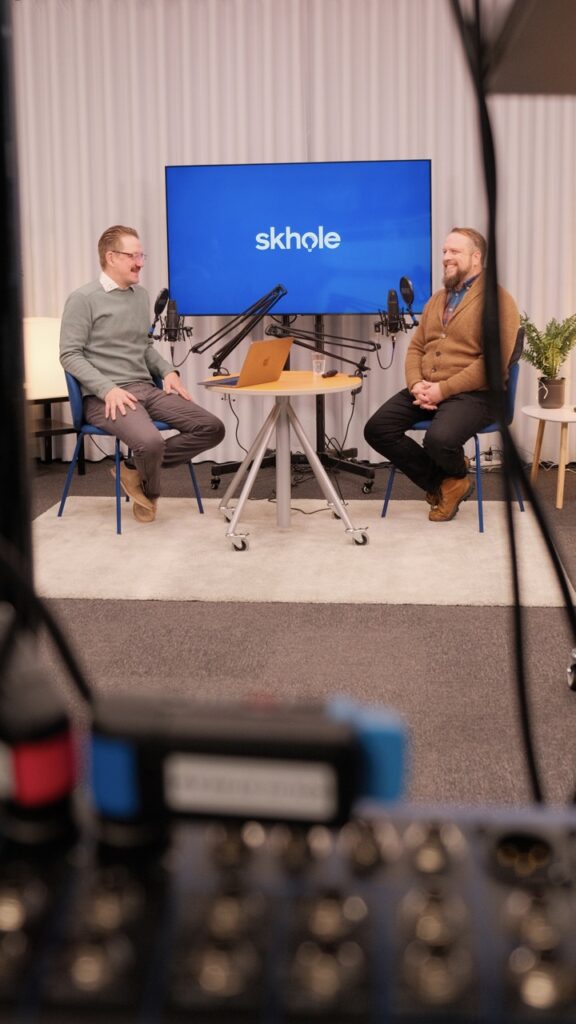
Example. We created comprehensive webinar series for Skhole and RATEKO in the education sector. The goal was not just to deliver a single webinar, but to build a production model for the entire series. When the entire series is planned out in advance, producing individual episodes becomes a routine process. Read the case study →
How Long Should a Webinar Be?
30–60 minutes usually works. What's more important than the exact number of minutes is that there are no idle periods in the program.
A working framework could look something like this:
Home > Expert Content > Discussion > Audience Questions > Summary
You don't have to plan the structure on your own. Once we know the goal, the topic, and the presenters, we'll help you find the right format and pace for your content.

Do we need a host?
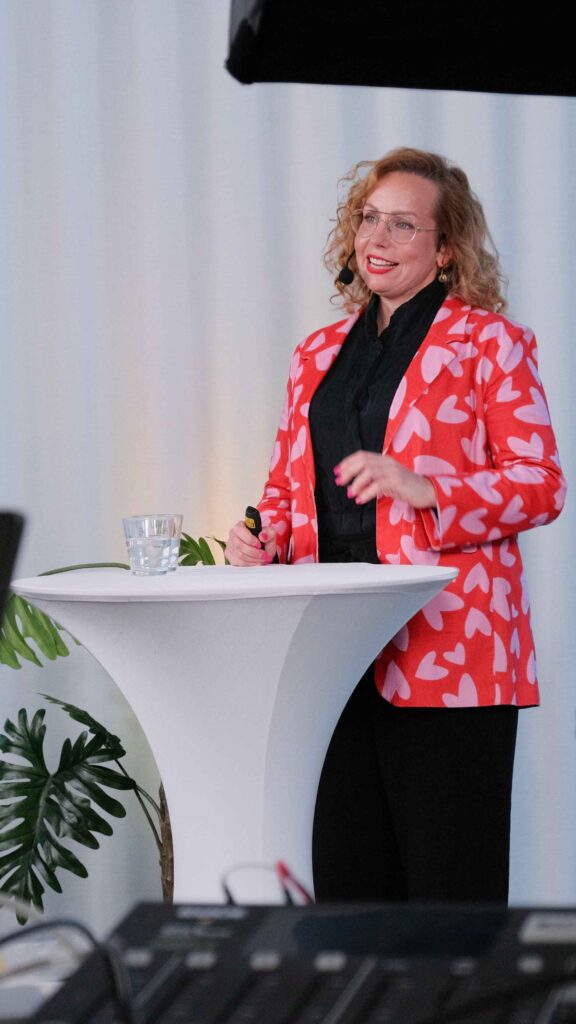
Not necessarily. In a small expert webinar, the expert usually leads the session quite well on their own.
In a webinar with multiple speakers or a discussion, a moderator is a good idea. They keep the program moving, assist the presenters, and also keep the online audience in mind—which is surprisingly easy to forget.
In an ongoing series, having the same host can be part of the concept. Familiar faces and a familiar structure make the episodes a recognizable whole.
How do you engage the audience?
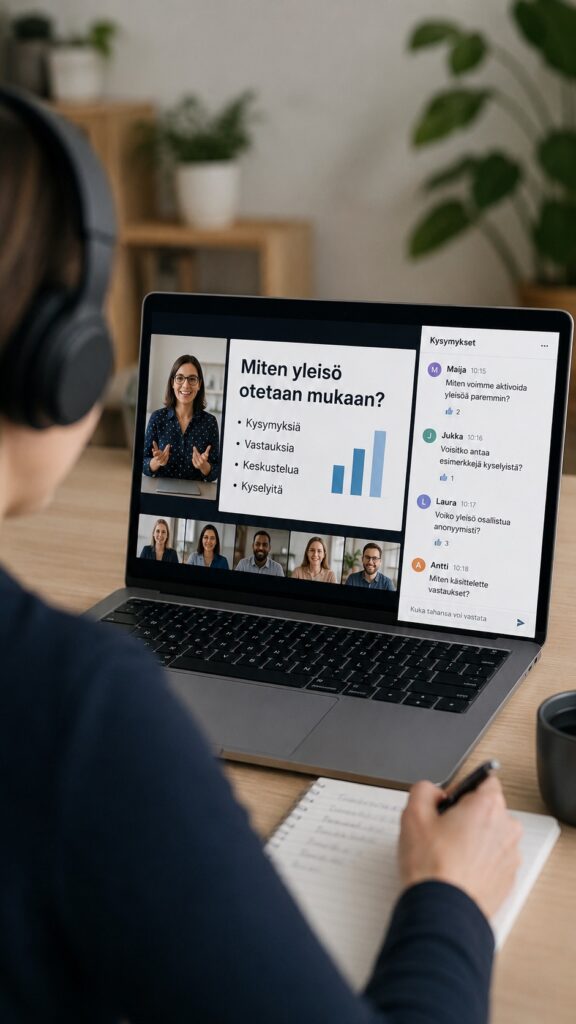
A webinar doesn't have to be one-way. The audience can ask questions, make comments, answer polls, or participate in the discussion.
However, not all webinars require interaction in the same way—and it’s not a good idea to include it just because it’s possible.
Instead of learning how to use the tools, all you need to do is think about one thing:
What do we want the audience to be able to do?
Tell us about it. We'll take care of the implementation.
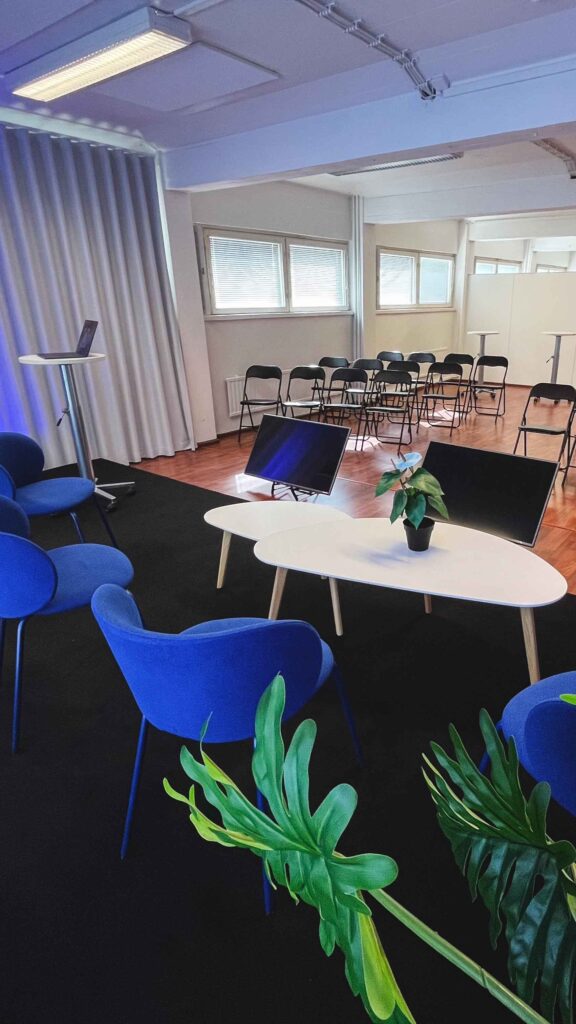
Where will the webinar be held?
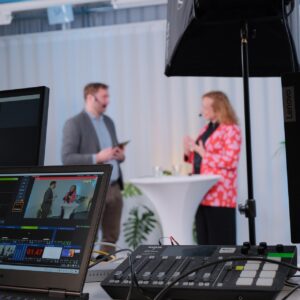
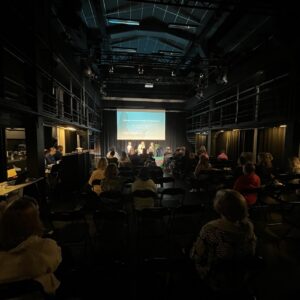
At your own location, at the event venue, or in a fully equipped studio.
Our Facilities are a good choice when the setting is related to the organization or the topic, or when it is easiest for the presenters to participate from their own workplace.
Studio It's a good option when you want a ready-made environment and as little setup as possible. Especially in recurring webinars, a familiar setting makes things easier: the presenter walks in and focuses on their own part of the presentation.
Which one do you prefer? You don't need to decide in advance. Once we know your goal and the performers, we'll recommend the best option.
On which platform will the webinar be held?
There are many options. Fortunately, you don't need to know the technical differences between them.
It is much more useful to consider the audience's experience:
- Do I need to register for the webinar?
- Would you like to know who's participating?
- Should the audience be able to ask questions?
- Is the broadcast open to the public or limited to a specific group?
- Will we watch it again later, too?
Tell us what you want the audience to be able to do, and we'll choose the right approach. No one needs to spend a workday comparing systems.
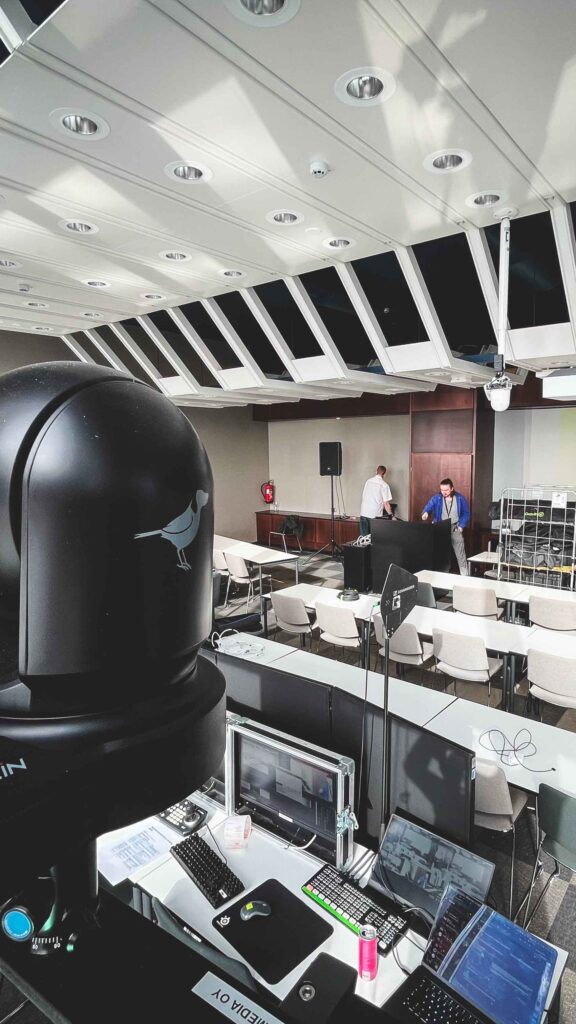
What about technology?
At this point, many people are expecting a list of cameras and microphones. There won't be one.
From the viewer's perspective, the requirements are ultimately very simple: the performers are clearly visible and audible, the content is easy to follow, and the broadcast runs smoothly from start to finish.
In a well-produced webinar, technology isn't the main focus. At its best, you don't even notice it.
The same applies to the organizer. When a professional handles the production, your staff won’t have to spend their time dealing with equipment, connections, or broadcast systems. And on the day of the broadcast, you won’t have to worry about who will solve the problem if something unexpected comes up.
Technology is our business. Content is yours.
How do you attract participants to a webinar?
Even a great webinar won't help if no one knows about it. This is the part that's usually left until last—and it directly affects the number of participants.
You know your audience better than we do. But that doesn't mean you have to do your marketing all by yourself.
We also help with webinar marketing:
- Content for the invitation and registration page — how to phrase the topic to make it interesting
- Email and newsletter communications, including reminders
- Social Media Campaigns and Advertising
- Use of Clips from the Broadcast in Marketing
- Search engine optimization to ensure that the webinar page and recording can be found even after the event
We handle some of it ourselves, and for other parts we rely on our partners. To you, this means a single point of contact and a cohesive whole—not a bunch of vendors you have to coordinate.
The most important thing is to clearly explain why it's worth attending. A good invitation doesn't just state the topic; it promises something valuable.
Two factors have the greatest impact on attendance: an invitation sent about two weeks in advance, and a reminder sent both the day before and shortly before the event begins. Typically, about half of those who register actually show up. This isn’t a failure—it’s a normal figure—and the rest can be reached through the recording.
The audience doesn't disappear after the broadcast
A recording can still attract viewers months later if it’s posted on a page that appears in search engine results. People look for information when it’s relevant to them—not when you held the event.
That's why it's a good idea to design your webinar page and recording to be easy to find right from the start. We can help with that, too.
The same applies to a series. Once people have participated, you can offer them the next installment. Gradually, the series builds up its own audience, so you don't have to start from scratch every time.
At its best, the webinar series will become your own recognizable media platform.

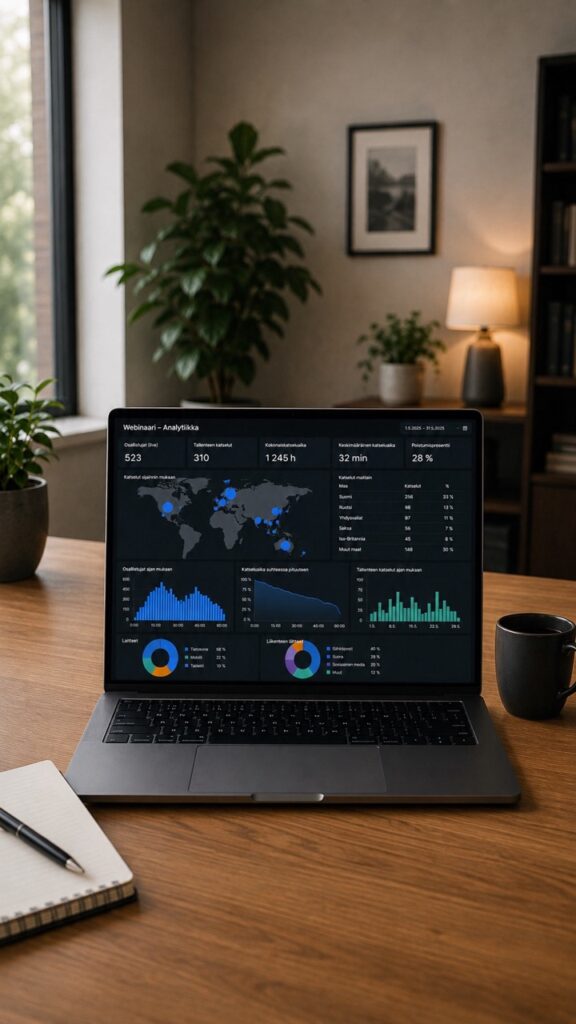
What happens after the broadcast?
When the broadcast ends, the work isn't quite finished—and this is where the most value goes untapped.
It’s a good idea to publish the recording so people can watch it and send it to the participants—including those who couldn’t attend. The same material can also be used to create short videos, social media posts, and other content.
You don't have to think about this after the fact. When you plan it in advance, the material can be filmed in the correct format from the start.
When webinars are produced as a series, a large amount of high-quality expert content is accumulated over the course of a year without a single video being produced as a separate project.
You'll also get information on how many people participated, how long viewers stayed engaged, and how many watched the recording later. Those numbers tell you more than just the number of registrants—and they'll help make the next event even better.
On your own or with a production partner?
You can easily host a simple internal webinar yourself using a familiar meeting platform. You don't need us for that.
The situation changes when webinars are held regularly, when they need to represent the organization properly, and when our own staff's time is valuable.
In that case, the value of a production partner isn't that they bring in better cameras. The value lies in the fact that someone else is responsible for making sure the whole operation runs smoothly.
You don't need to know how to put together a broadcast. You don't need to compare options. You don't need to spend the day of the broadcast monitoring production.
You can focus on your content and your own audience.
Frequently Asked Questions
How long should a webinar be? 30–60 minutes usually works. More important than the duration is that the program doesn't have any downtime.
How many of those who registered will attend? Typically, about half. Reminder messages significantly increase that percentage, and the rest are reached through the recording.
Do we need to have prior experience? No need. For most people, a webinar isn't an everyday occurrence. We also guide the presenters if it's their first time on a live broadcast.
Can we host the webinar at our own facilities? Yes. We can do it both at your location and at our studio.
Can I get a recording of the broadcast? Yes, and it's always worth doing. It can later be used to create training materials, marketing content, and video clips.
Can the performer be remote? Yes. The remote performer is integrated into the broadcast so that the whole thing looks seamless to the viewer.
Do you also help with content planning? Yes. We can be involved from the very first idea: the structure, the flow, and how your experts' content works best on screen.
Do you help with marketing? Yes. Invitations and registration pages, newsletters and reminders, social media campaigns, and search engine visibility for webinar pages and recordings are all part of what we can handle. We handle some of it ourselves and use our partners for the rest.
What if the transmission doesn't work? The risk is significantly reduced when production is planned in advance and tested before shipment. Contingency plans are part of the plan, not improvisation.
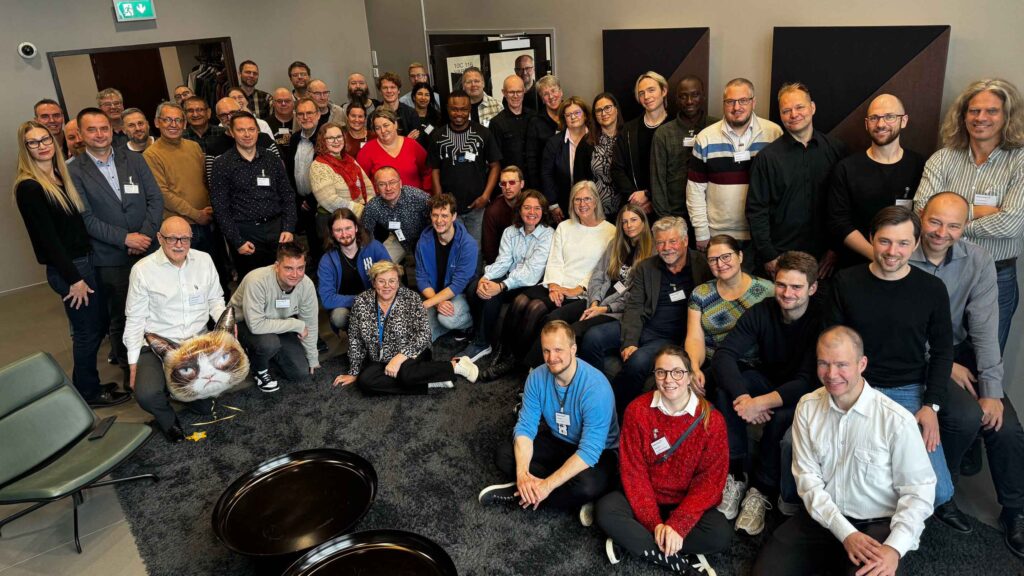
The best webinar is often not a one-time event
If you want to use webinars to build brand awareness, establish expertise, or strengthen customer relationships, it’s a good idea to think of them as an ongoing source of content.
The first time, you develop the concept. The second time, you’re already familiar with the process. And as you repeat the same model, creating webinars becomes a routine task—not a constant source of extra work.
We have been producing live broadcasts for over 13 years for clients such as Statistics Finland, VTT, the Goethe-Institut, and the European Parliament.
We’ll help you with every step of your webinar—from the initial idea and content planning to reaching your audience, the day of the broadcast, and making the most of the recorded material. All from a single partner, as a complete package.
You don't need to come to us with a finished production plan. All you need to know is what you want to talk about and who you want to reach. We'll use that to create an effective webinar.
And if you want to turn it into a series, we'll build a model that works every time.
Focus on the content. We'll handle the production.
Let's plan your webinar → See what's included in webinar production →
See also
- Webinar production — What the service includes
- Production of a Hybrid Event — when part of the audience is in attendance
- Webinar Studio in Helsinki — environment ready for broadcast
- Frequently asked questions about live productions

 English
  Suomi
Suomi  Svenska